

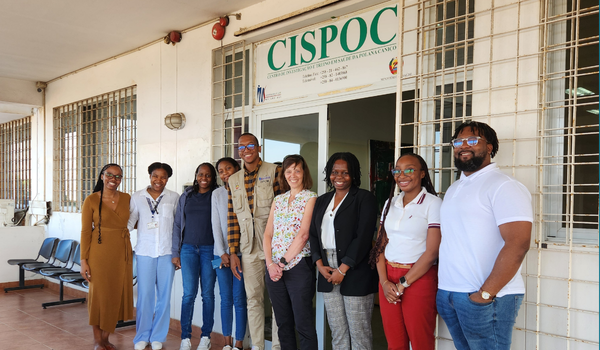
In the capital city of Maputo, Mozambique, sits a low-slung yellow building encasing some of the most vital, national-standard scientific research to serve the public health concerns of a country with well over 30 million people. The Centro de Investigação e Treino em Saúde da Polana Caniço (CISPOC), part of the Instituto Nacional de Saúde de Mozambique (INS), has a rich history with public health and biomedical research. In addition to clinical and operational research on tuberculosis (TB), HIV and emerging infections, the center is a vital training ground for students and health professionals. In 2015, INS ran its first TB clinical trial and by 2025, they were running five adult and pediatric TB clinical trials.
Dr. Celso Khosa, a researcher at INS and the general director of CISPOC, believes the last decade-plus of innovation in TB in Mozambique shows the kind of evolution that is possible when you are strategic and work with strong collaborators. Starting with trials of both diagnostics and implementation science in adults, researchers built up the capacity to start working with children, a population with unique challenges when it comes to TB and particularly important in Mozambique. As partners in both U.S. Government-funded SMART4TB trials, Assessing Diagnostics at Point-of-Care (ADAPT) for Kids and Shortened Regimen for Drug-susceptible TB in children (SMILE)-TB, the INS team is leading the way in transformative research on pediatric TB diagnostics and treatment.
When children arrive at a healthcare clinic with symptoms like a cough and fever, clinicians and their patients are immediately thrust into a series of challenges. In addition to the fundamental difficulty of getting a sputum sample from a child, doctors must find dedicated space for the child to produce the potentially infectious sample and often need suction and aspiration devices, especially for younger children. The likelihood of a clinic having the space, healthcare workers having the necessary training and consistent power for the devices makes traditional TB diagnostics a difficult hurdle.
Ever since ADAPT for Kids, a study examining new point-of-care TB diagnostic tests for children like tongue swabs, urine samples and AI-based technologies, launched at INS the clinic has seen a marked improvement in diagnosis and the national health system has benefitted from these advances. “It’s exciting to talk to parents and caregivers about the new tests, it’s more comfortable for them and their child and it eases the fears of clinicians as well,” said Dr. Denise Banze, a researcher at INS and co-principal investigator on the ADAPT for Kids study. “You see a lot of TB in Mozambique and our goal is to make it a less scary prospect in children’s lives, both by getting them test results quickly and offering them treatment options that are manageable.” This is where the SMILE-TB study comes in, evaluating if a treatment shortening two-month regimen of a series of antibiotics—isoniazid, rifapentine, pyrazinamide and moxifloxacin—is as effective as the current standard of four-to-six months of isoniazid, rifampicin and pyrazinamide with or without ethambutol.
Dr. Banze estimates that 80% of enrollees in the SMILE study will come from a positive diagnosis made possible by the ADAPT for Kids trial, ensuring a seamless treatment path for children and their parents and caregivers. The potential for shorter treatment is vital for helping children complete treatment and ensure they can live healthy, productive lives. “We know how hard it is to take antibiotics for even seven days, now imagine asking a child to take it for months on end, it is a big challenge,” said Dr. Khosa.
In addition to managing the trials, clinicians and staff at INS have dealt with many unexpected challenges that have changed the frequency of patients coming for care, including flooding, civil unrest and healthcare worker strikes. Through it all, the team has maintained its commitment to providing children with the highest level of consistent care and has shown resilience by keeping their doors open. “We feel very confident doing TB diagnostics for children and have earned the trust of health facilities around the country so even in these challenging times, we still get calls from providers who would like us to look at a child,” said Dr. Banze.
Study coordinator Dr. Márcia Mutisse recalls a mother bringing in her sick 12-year-old daughter, desperate for answers as the girl was losing weight, coughing, and having trouble breathing. Despite the difficulty of reaching the clinic because of the lack of public transportation, the mother returned the next day to receive the results. The study team arrived early to ensure they could meet the family and support them through the process, which led to a diagnosis of multi-drug-resistant TB. Although the diagnosis was difficult, the mother and daughter persevered, and the child began to show improvement within a week after starting treatment. Reflecting on the patient and parent, Dr. Mutisse noted, “This experience showed me that what we are doing can help children and their families not only in the future but right now. Parents need people like us to design new strategies and to be there for them, no matter the circumstances.”
The evidence that Mozambique is generating will help influence global diagnostic guidelines and treatment recommendations, an important opportunity for local knowledge to inform broader policies and practices.
As for the day-to-day of running the trials, Dr. Khosa credits the local community members who advise them on their studies and help inform potential participants about the trial and its benefits for their success so far. “They are amazing, leaders in their community and in our work. Together, we are all working to help children have better, healthier lives.”