
 In Mongolia, the winters are often long and bitterly icy; it is not unusual to experience coughing, a fever and achy tiredness. Yet these generic symptoms can sometimes be something far more dangerous than a common cold: tuberculosis. In fact, Mongolia is considered to have high burdens of tuberculosis (446 per 100,000 people are diagnosed with tuberculosis) as well as rifampicin-resistant tuberculosis (RR-TB; 29 per 100,000 people are diagnosed with RR-TB in Mongolia), which can’t be cured by standard first-line antibiotics.
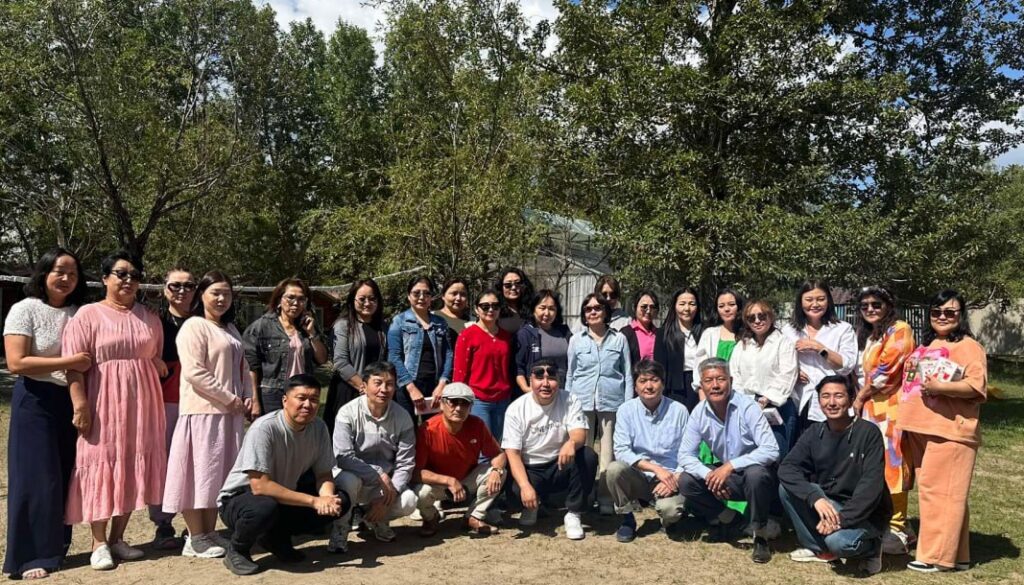
Getting shorter RR-TB treatment is vital, according to Dr. Bazra Tsogt principal investigator for the Program for Rifampicin-resistant disease with Stratified Medicine for TB (PRISM-TB) trial at National Center for Communicable Diseases (NCCD) and research and innovation Lead at Mongolian Anti-Tuberculosis Coalition. Dr. Tsogt found herself drawn to TB because of its significant public health impact and individual burden related to the disease, both for people living with it and for healthcare professionals who care for them. “There weren’t enough people working on TB and as the rates and stigma towards it increased, I knew that I wanted to work on this issue.”
After 20 years of working in the field, Dr. Tsogt sees the approach evolving in Mongolia to a more patient-centered model with new innovations in diagnostics and treatment adapted more readily. “Our health infrastructure here is good; every province and district has a general hospital, TB dispensaries and we have over 540 primary health centers nationwide, so we are well equipped to reach people,” said Dr. Tsogt. Mongolia also had a landmark moment in TB research when NCCD participated in both stages of the Evaluation of a Standardized Treatment Regimen of Anti-tuberculosis Drugs for Patients with Multidrug-resistant Tuberculosis (STREAM Trial), the first large-scale, multi-country clinical trial to examine shortened regimens for drug-resistant TB. Under her leadership, the NCCD team successfully retained every enrolled participant.
Dr. Tsogt is bringing the same commitment to excellence and enthusiasm to PRISM-TB. This randomized, controlled trial is looking at a more personalized approach to shortening RR-TB treatment, in which participants are assigned to either the standard of care control for RR-TB, or one of two experimental arms: four months of treatment, or stratified to three or six months based on several factors which influence treatment success, including age, sex, body mass index, lung cavitation and HIV status. The NCCD site was the first to enroll in the trial and plans to enroll 70 participants, with sites in Peru and Uganda also currently enrolling.
The potential impact of shorter, personalized treatment on participants and the healthcare system is huge for a country with vast distances between cities and a nomadic, seasonal working population that can find sustaining longer treatment schedules more challenging, but working with participants with RR-TB also can mean thinking through a constellation of social challenges that must be addressed holistically. “A clinical trial is not just research; it goes beyond that. The collaboration needs to look at the social and economic aspects of trial participants; some are dealing with job loss, homelessness and alcohol dependence. We must help answer their questions about TB, but we also need to work with them on their other issues, which are often just as pressing.” Dr. Tsogt partners with non-governmental organizations to help potential participants find housing and get treatment. “Our teams must be flexible and persistent, and I am proud to say that we have not lost a participant that we have recruited for this trial yet.”
One of the ways that Dr.Tsogt and the coalition work with participants is bringing in a member of the TB community advisory board (CAB), a group dedicated to advocating on behalf of people living with TB and to helping them navigate the day-to-day challenges of living with the disease. Davaajav Khandjav is the CAB coordinator for the PRISM-TB trial and as a multi drug-resistant TB survivor and participant in the STREAM trial, he can address participants directly and honestly about their challenges. “Many people we meet with come in closed off, not sharing much and unsure if TB can be cured. I share my story as proof that it can be cured, and I talk about my challenges, remembering how I felt when I was in their shoes. Slowly they open up and we talk about treatment and side effects together with them and their family.”
This approach ensures that there is a supportive community for the participant and has been so successful, the Mongolian National TB Program has adopted some of its elements into the national TB guidelines. “Participants who go through treatment are so grateful for the opportunity to participate in research and receive good care. I hope this trial is a bridge to even more research to shorten other forms of TB treatment,” said Khandjav.
“I am proud that we were the first [PRISM-TB trial] site to open and enroll participants, it confirms that Mongolia can be at the forefront of international TB clinical research. If the trial is successful, it will lead to better policies in Mongolia and most importantly, a better life for people living with RR-TB,” said Dr. Tsogt.